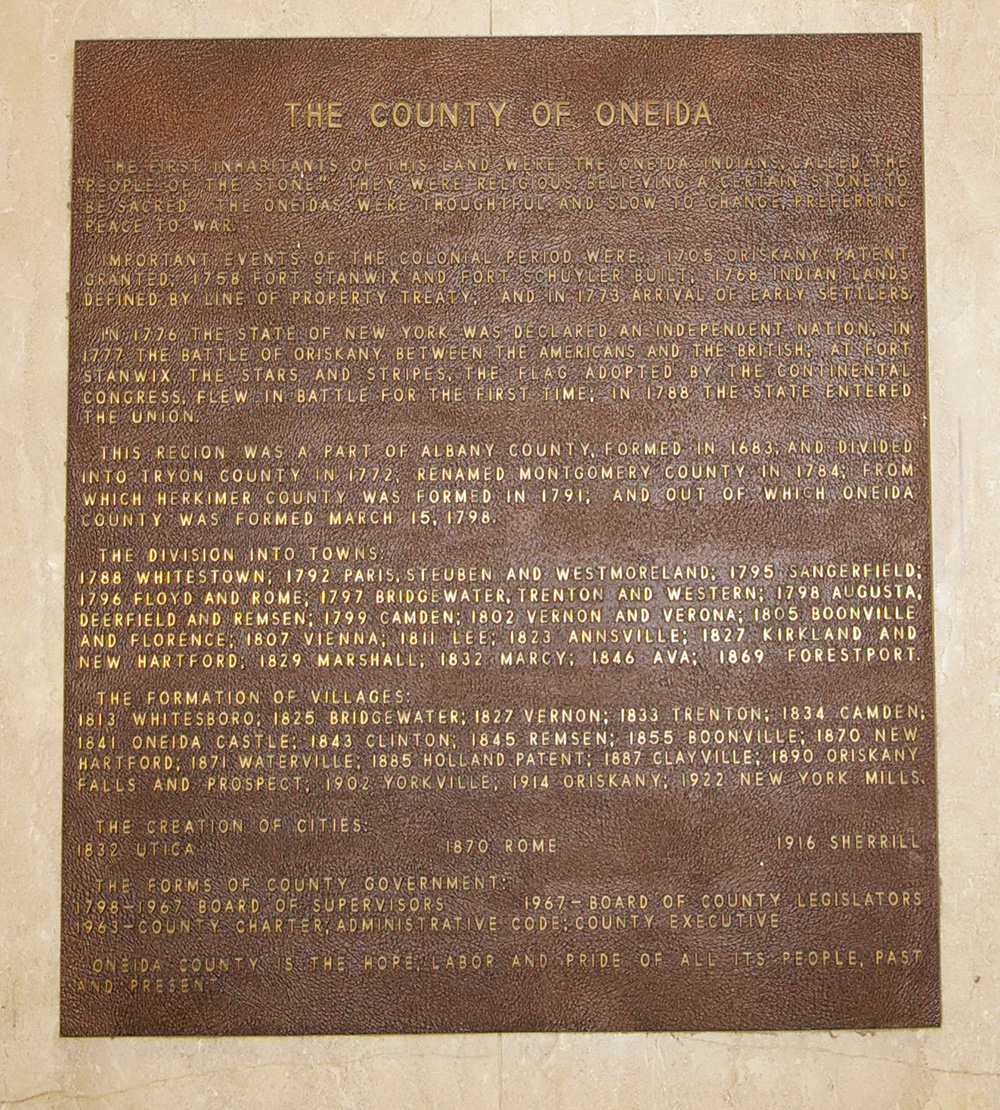
Oneida County is named for the Oneida Native America tribe.
Surrounding County Courthouses:
N – Lewis County
E – Herkimer County
S – Otsego County and Madison County
W – Oswego County

Created: March 15, 1798
County Seat:
Rome 1798 – present (shares seat)
Whitesboro 1801 – 1853
Utica 1853 – present (shared seat)
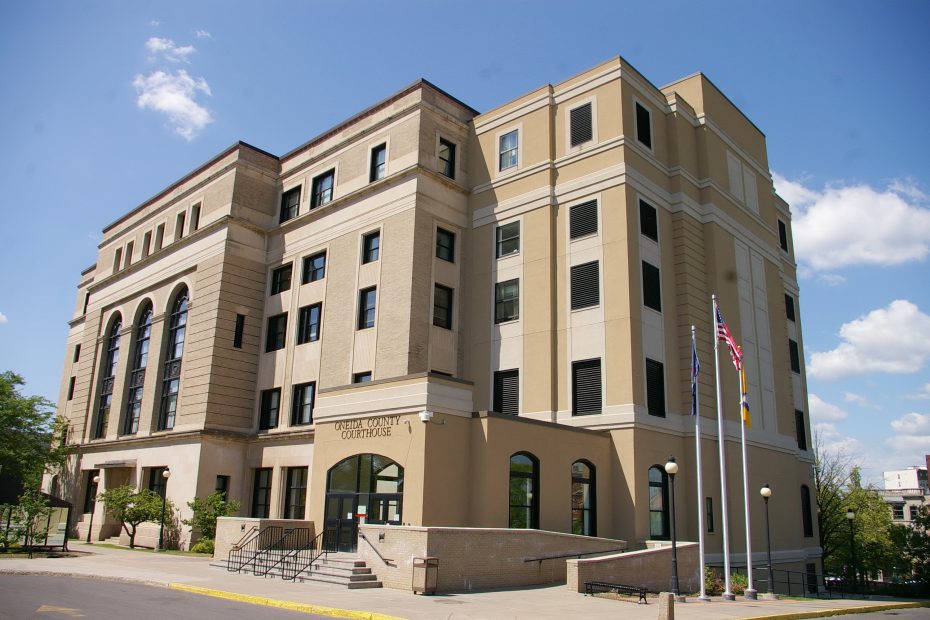
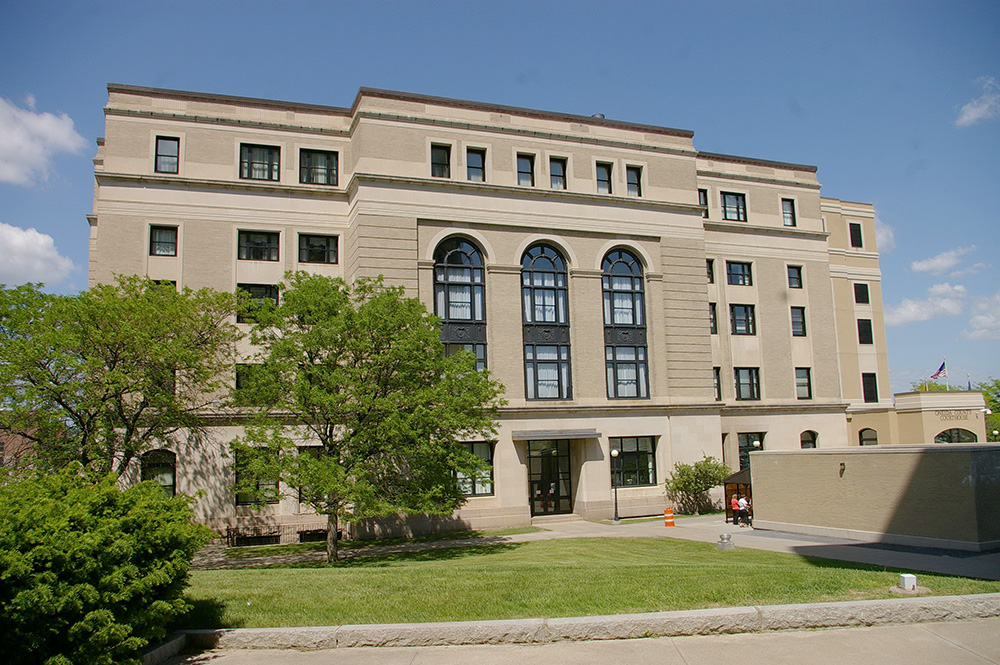
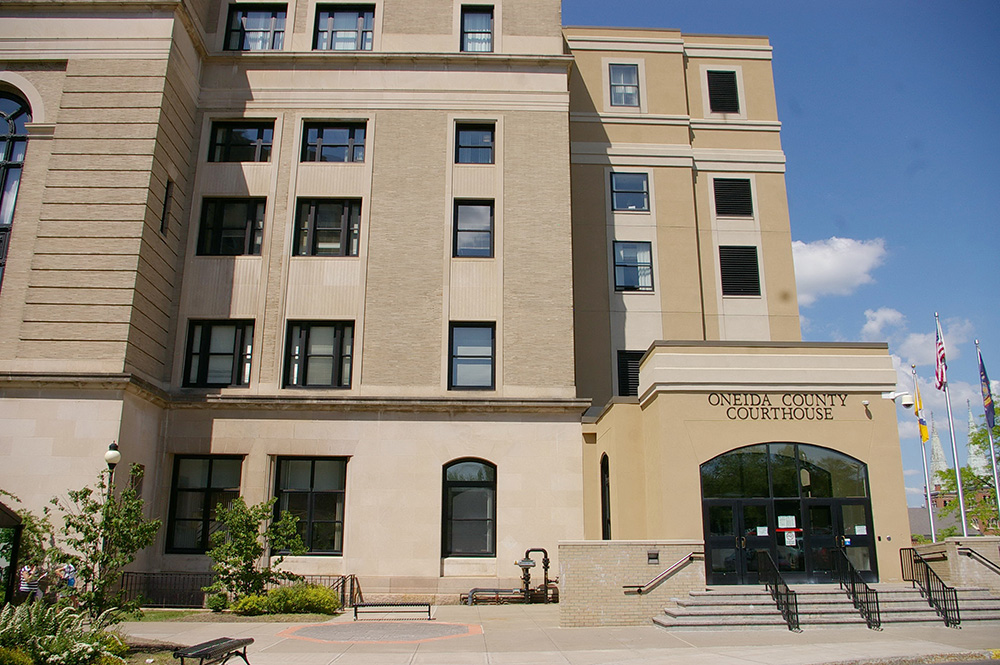
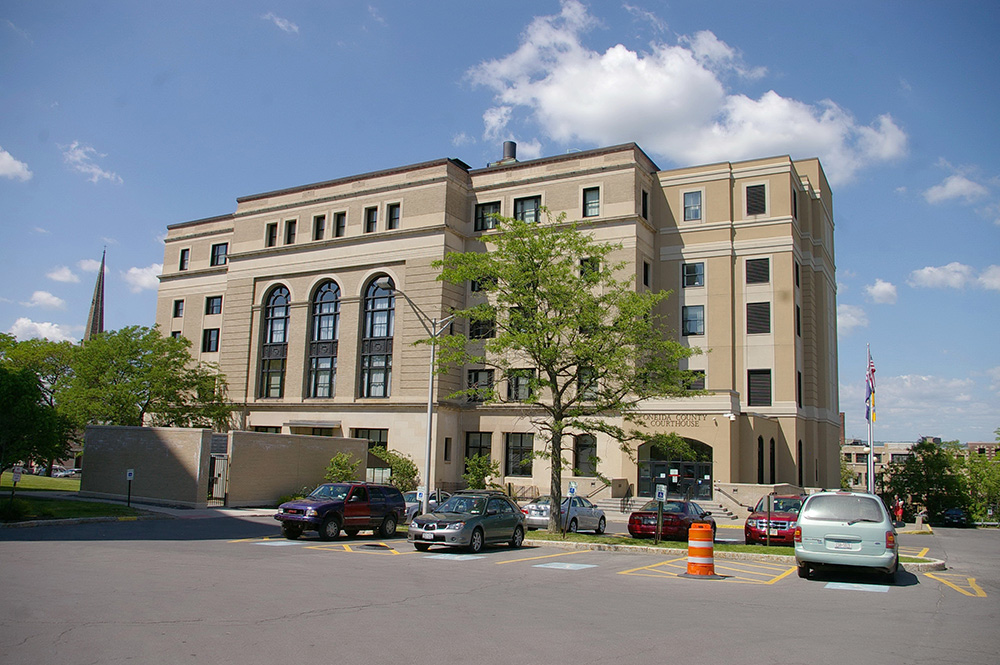
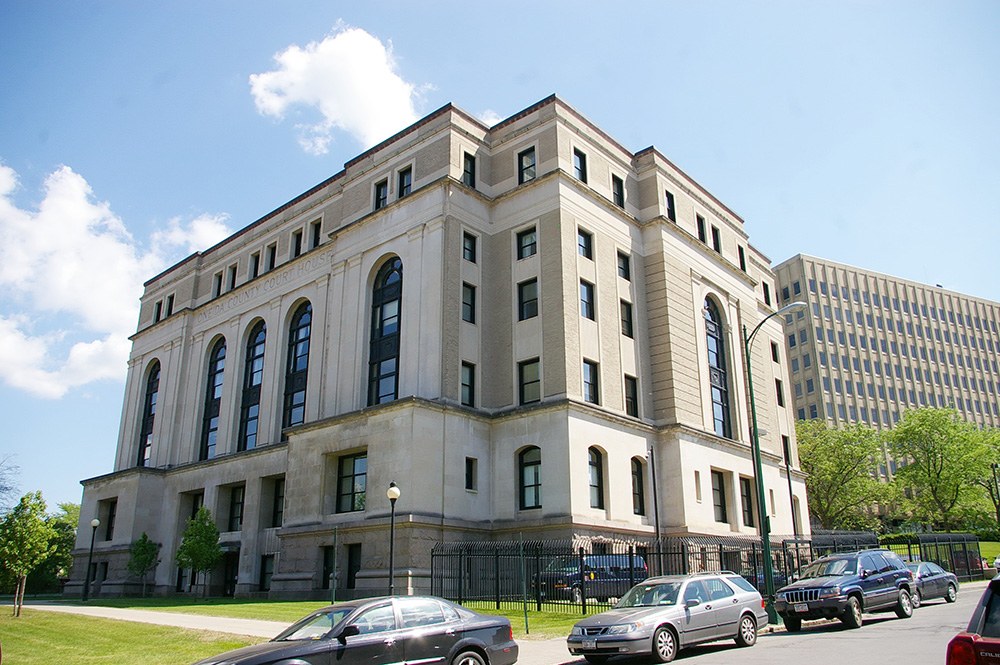
County Courthouse – Utica
Location: 200 Elizabeth Street / Charlotte Street
Built: 1908 – 1910
Style: Neo-Classical
Architect: Olin W Cotter and Alfred C Turner
Contractor: Conners Brothers Construction Company
Description: The building faces north and is a five story buff colored brick and concrete structure. The building has an extended center section on the north and south with three high arched windows. The next section also extends from the main building. The entrance is at the southeast corner. The roof line is flat. The building was remodeled in 2003. The contractor was Greg Grate.
See: The 5th Judicial District is located at 600 State Street in Syracuse and includes Herkimer County, Jefferson County, Lewis County, Onondaga County and Oswego County.
History: The county was created in 1798 and Rome was selected as the county seat. The first courthouse was a timber-frame structure built in Rome in 1801 which was later destroyed by fire in 1848. In 1801, the county seat was moved to Whitestown and the second courthouse was built in 1806 to 1807 and is still standing. In 1839, Utica became a county seat and the court met in the Academy on the east side Chancellor Park. The third and present courthouse in Rome was built in 1849 to 1851 on the same site at the corner of North James Street and East Court Street at a cost of $12,000. The fourth courthouse was built in Utica in 1851 to 1853 at a cost of $20,000. The fifth courthouse was designed by Olin W Cutter & Turner and constructed by Connor Brothers Construction Company in 1908 to 1909.
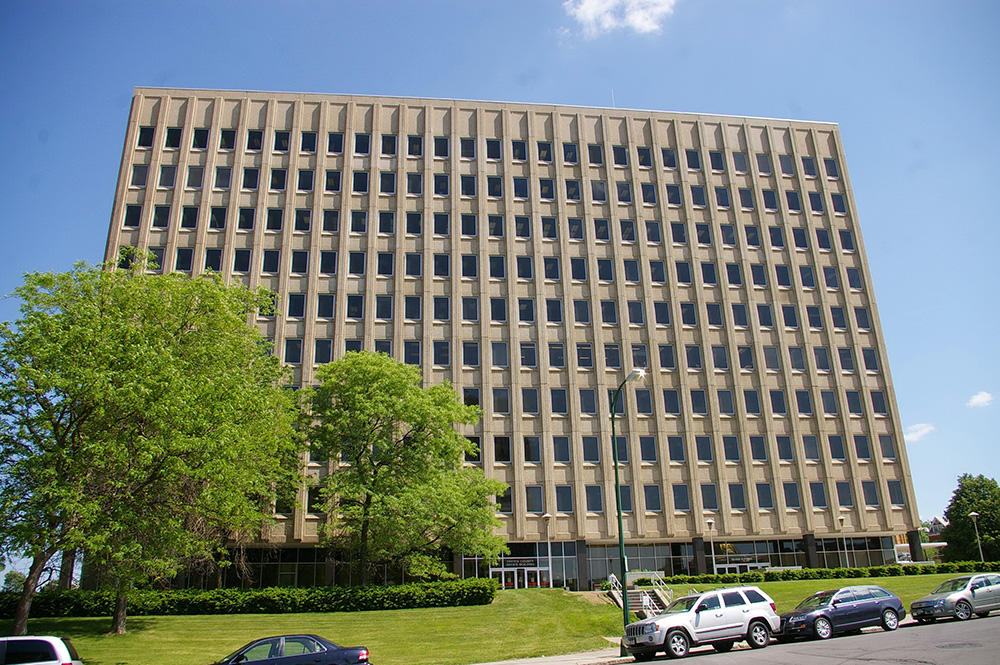
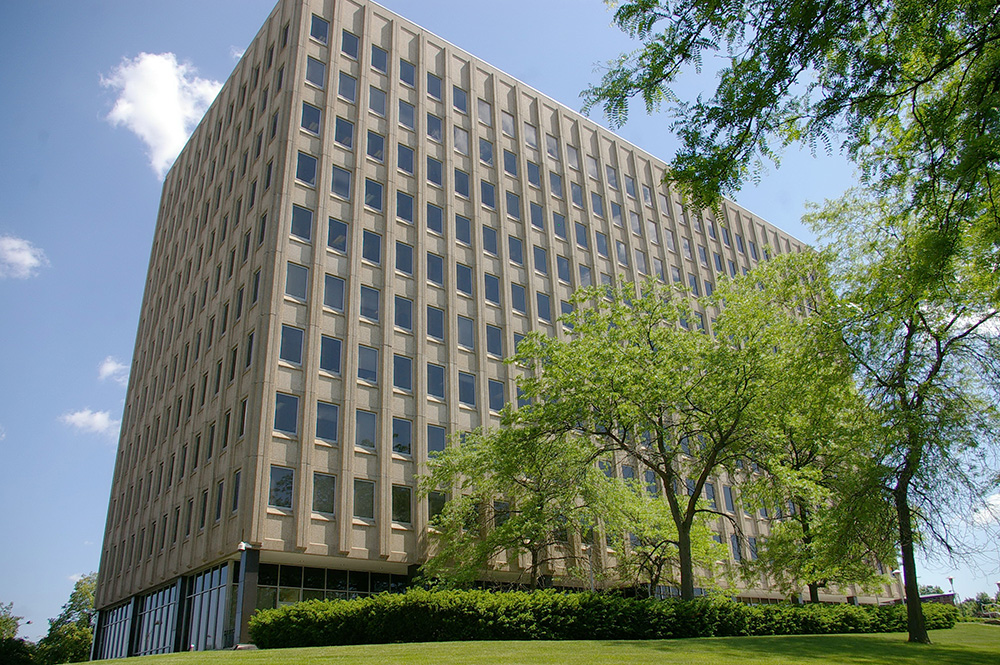
County Administration Building – Utica
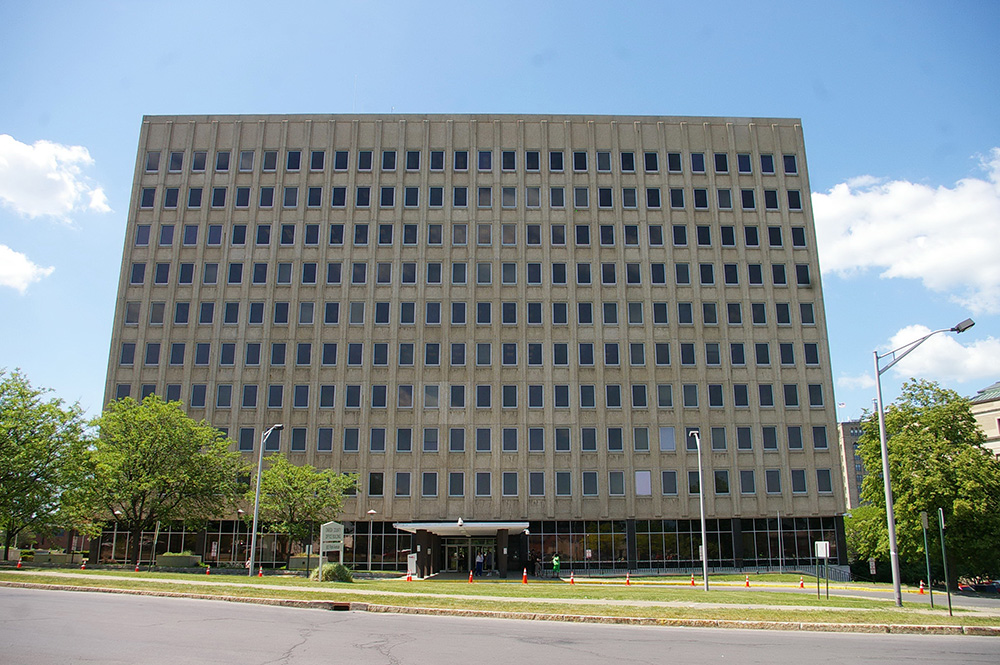
Location: 800 Park Avenue / Mary Street
Built: 1967 – 1969
Style: Modern
Architect: Edmund J Booth
Contractor: Vincent J Smith Inc. of Johnson City
Description: The building faces east and is a ten story concrete and glass structure. Vertical dividers run between the windows. The first story of the rectangular building is recessed. The roof line is flat.
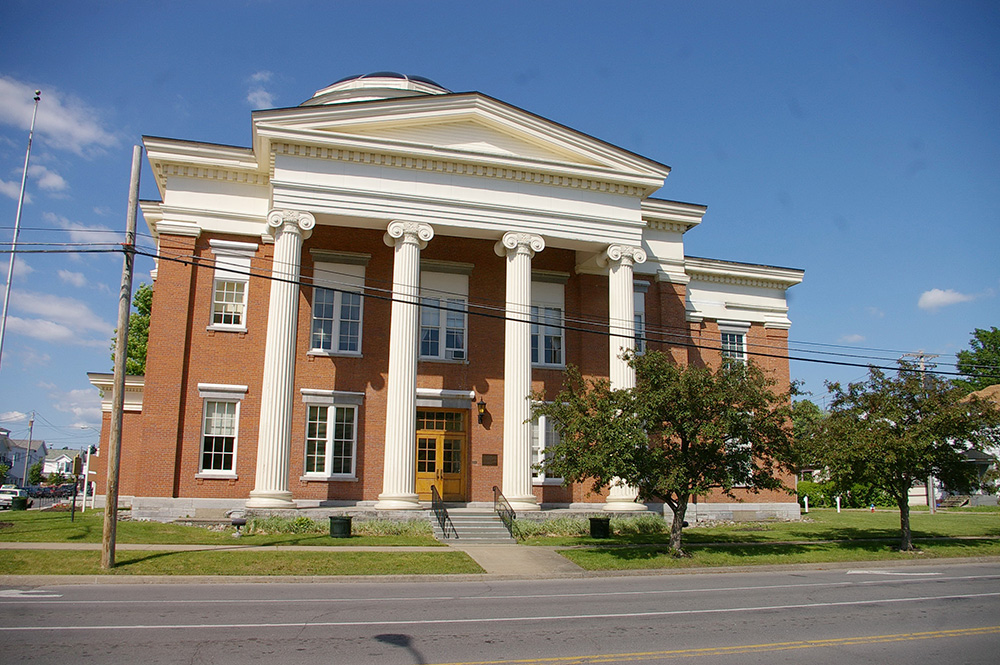
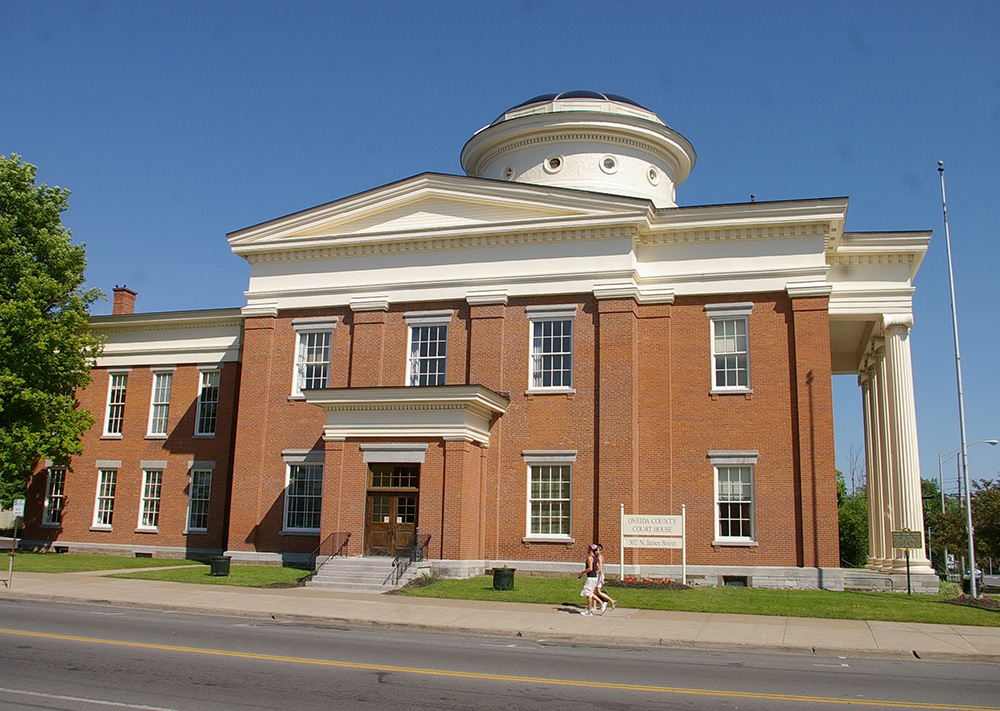
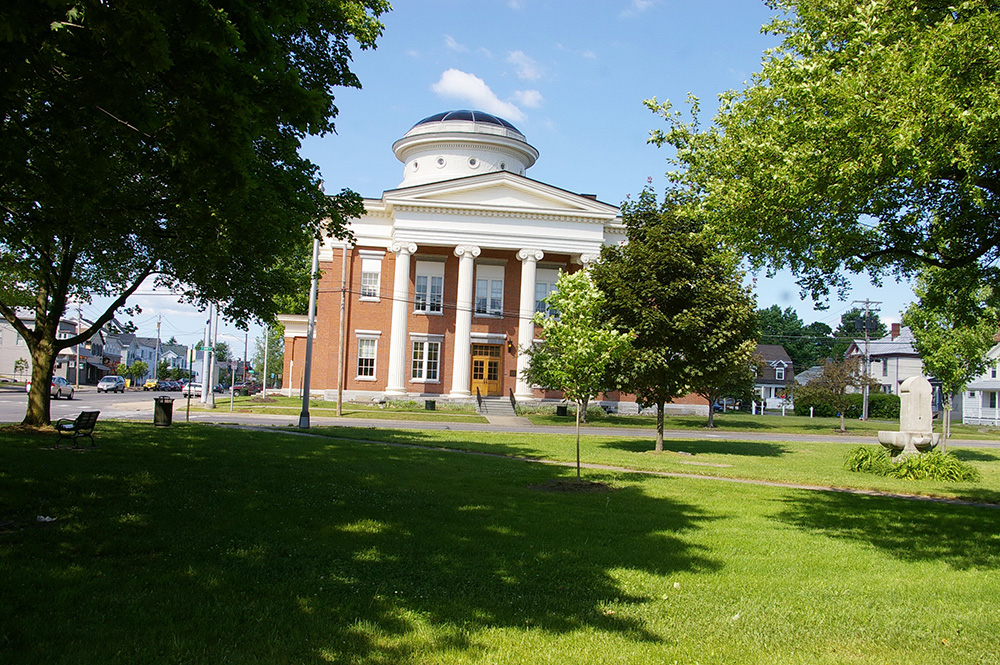
County Courthouse – Rome
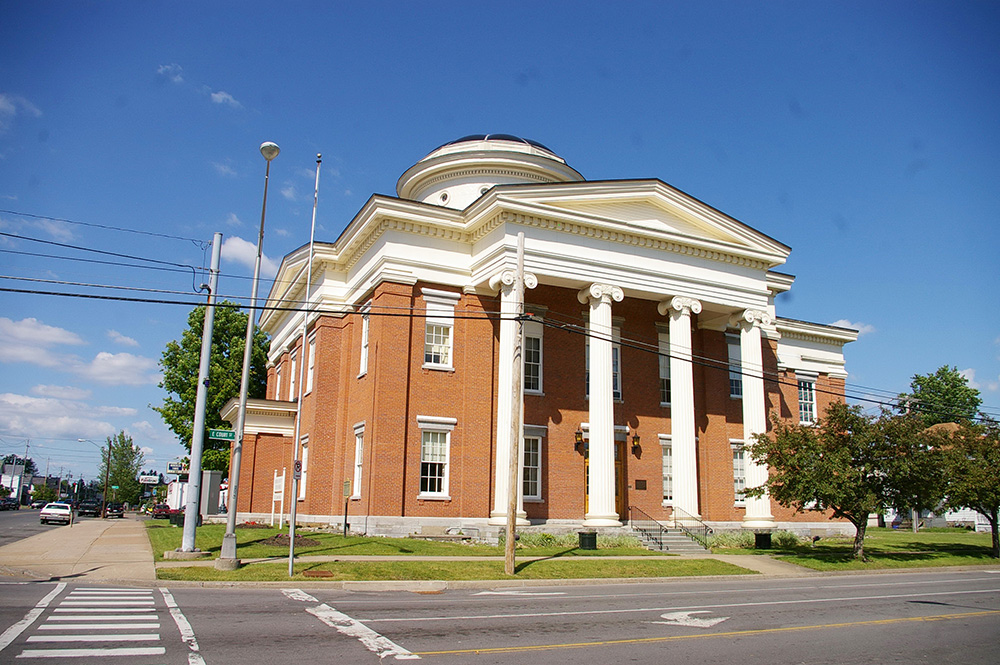
Location: 302 North James Street / Court Street
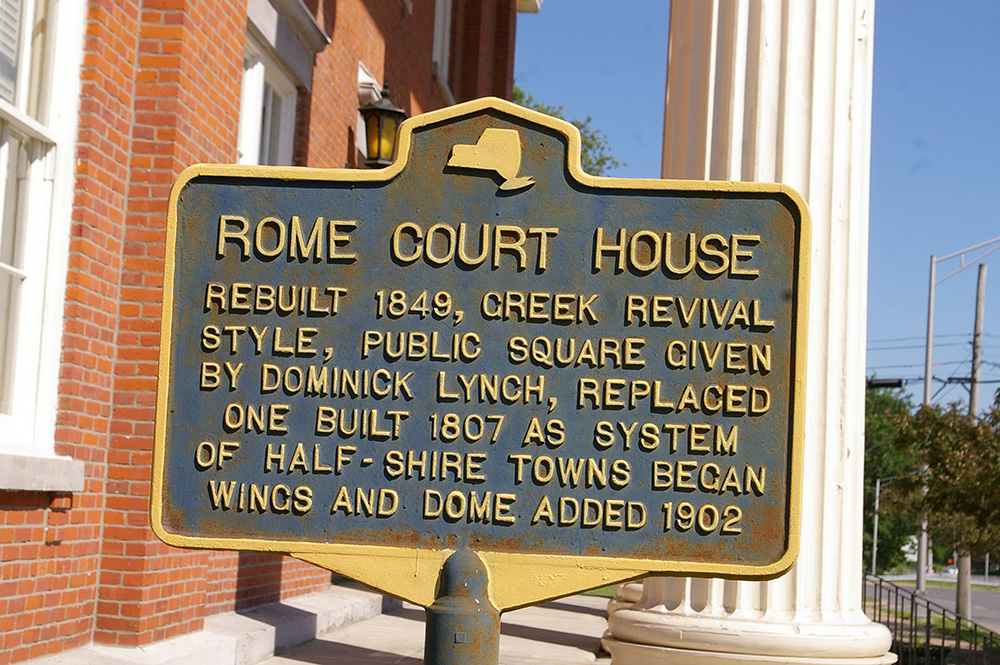
Built: 1849 – 1851
Style: Greek Revival
Architect: Daniel Prince
Contractor: Unknown
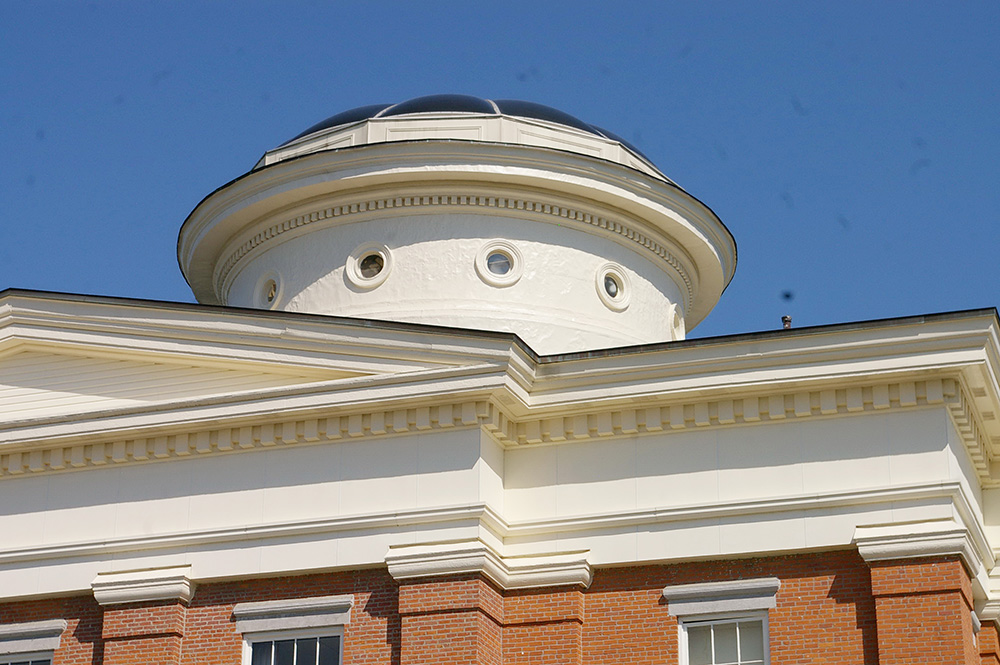
Description: The building faces south and is a two story orange-red colored brick structure. The south front has a large portico supported by four high columns with pediment above. A wide horizontal band runs below the roof line with overhanging eave. On the center of the roof is a round dome with small round windows and with rounded roof. An addition was added in 1874. Another addition was added in 1897. The architect was Jacob Agne, Jr. The wings were added to the building in 1902. The architect was F W Kirkland.
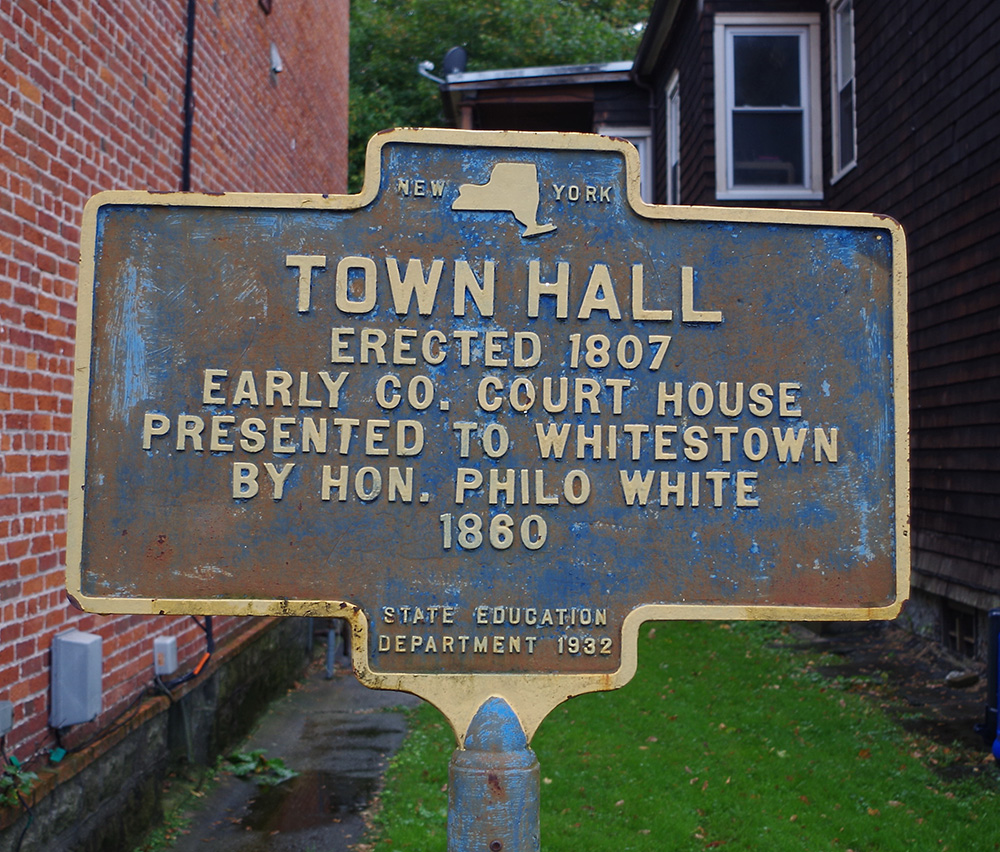
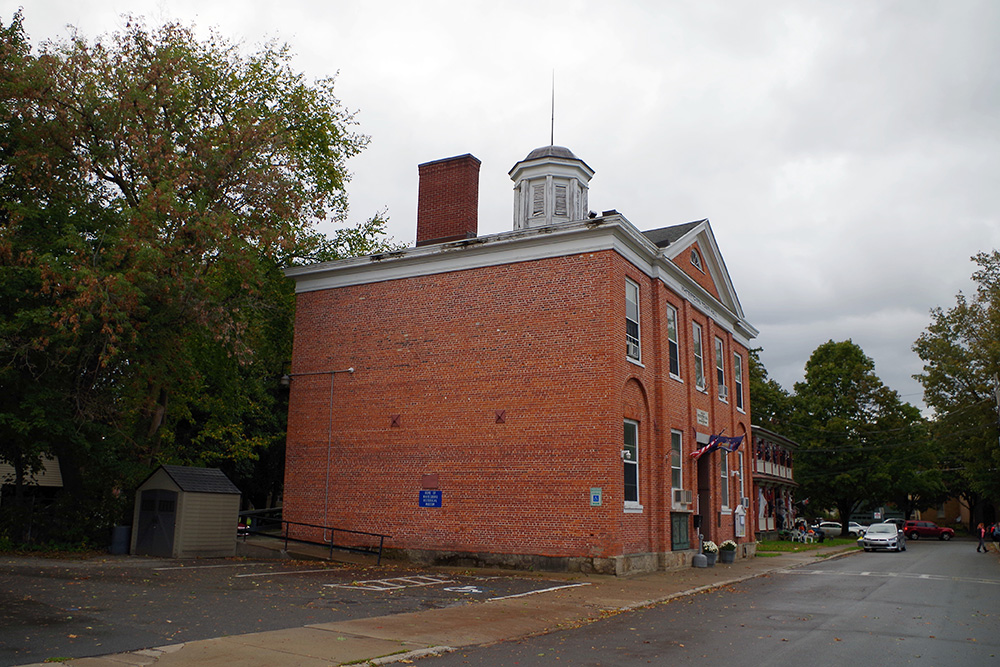
Old County Courthouse – Whitesboro
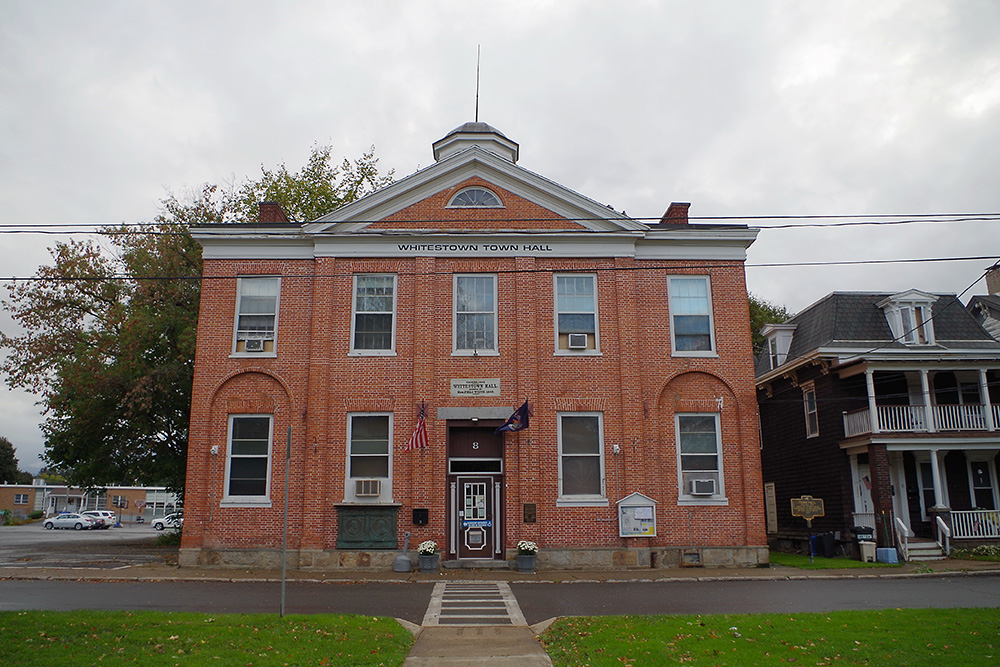
Location: 8 Park Avenue / Clinton Street
Built: 1806 – 1807
Style: Greek Revival
Architect: John Hooker
Contractor: Jonas Platt, Abraham Camp and William G Stone
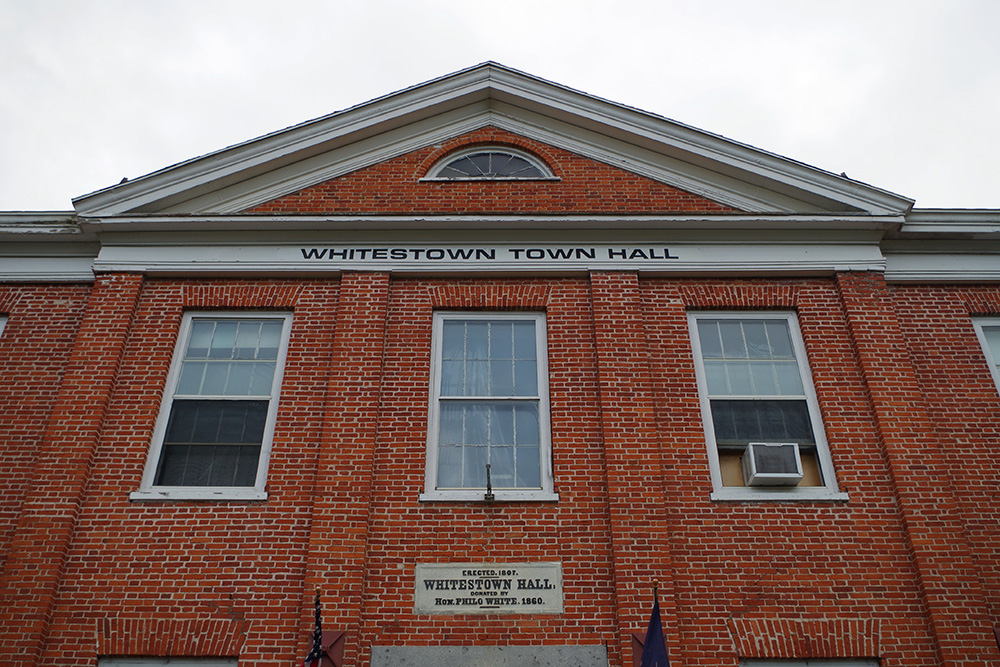
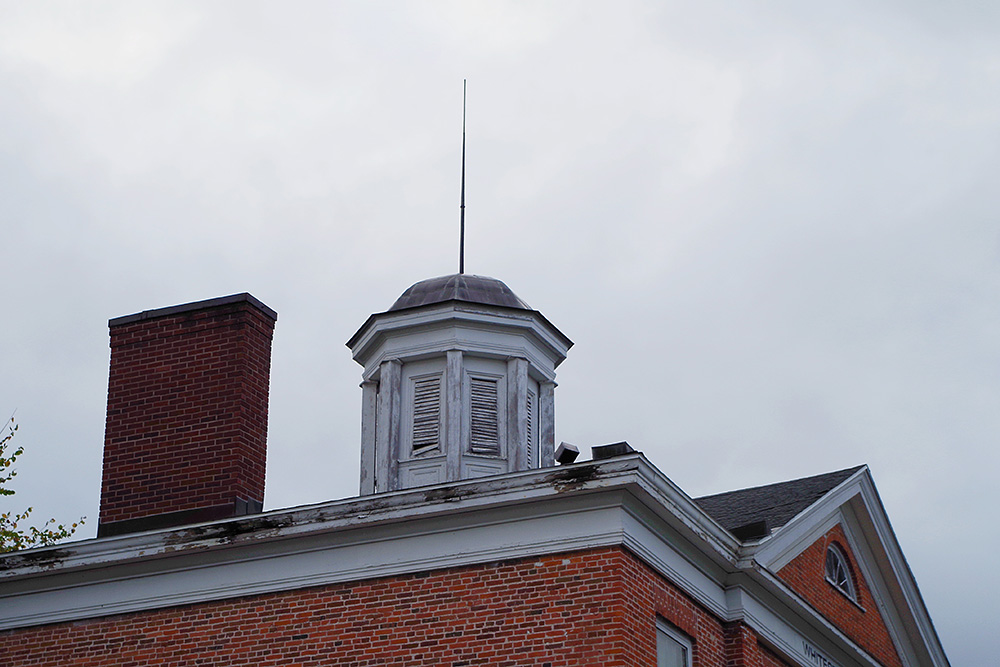
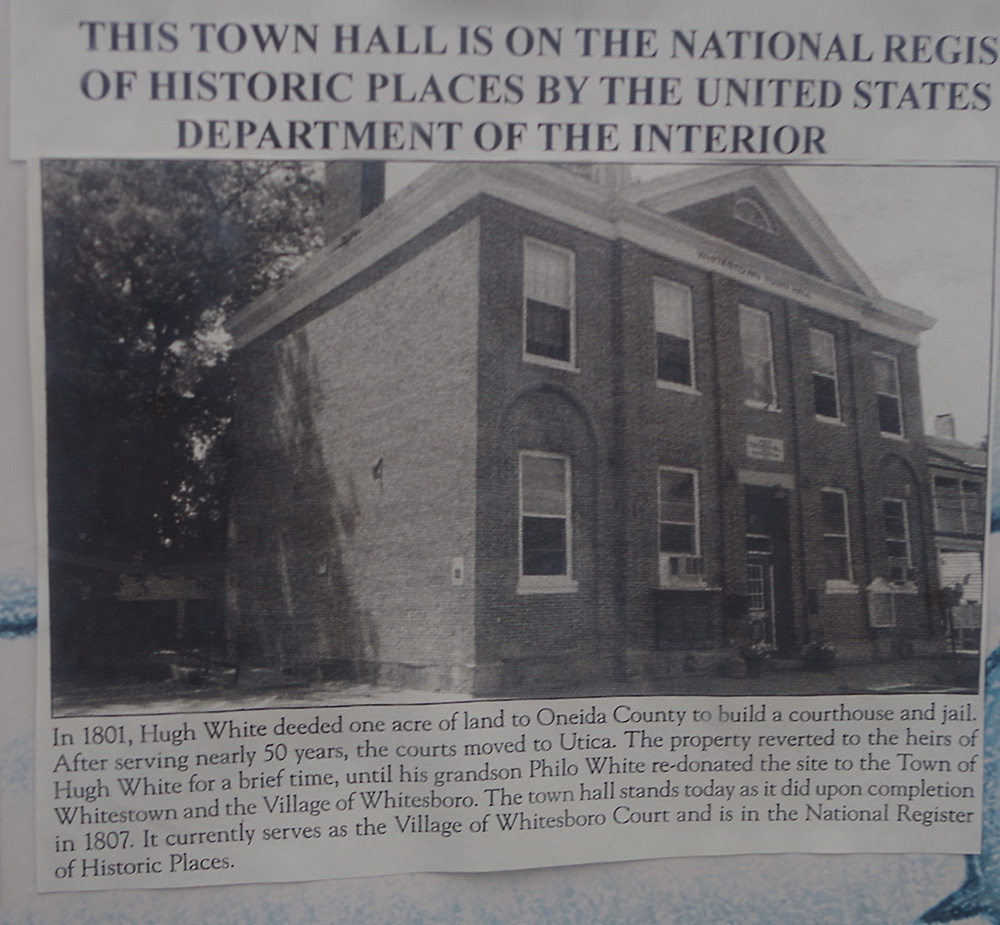
Description: The building faces northeast and is a two story red colored brick and timber frame structure. The northeast front has a central entrance. The building has a stone foundation. The design of the five-bay façade is emphasized toward the center by four two story pilasters terminating at the top by wood cornices. Equally appealing is the triangular pediment which joins the roof. Atop the roof is an octagonal white colored cupola flanked by a large chimney on either end of the building.
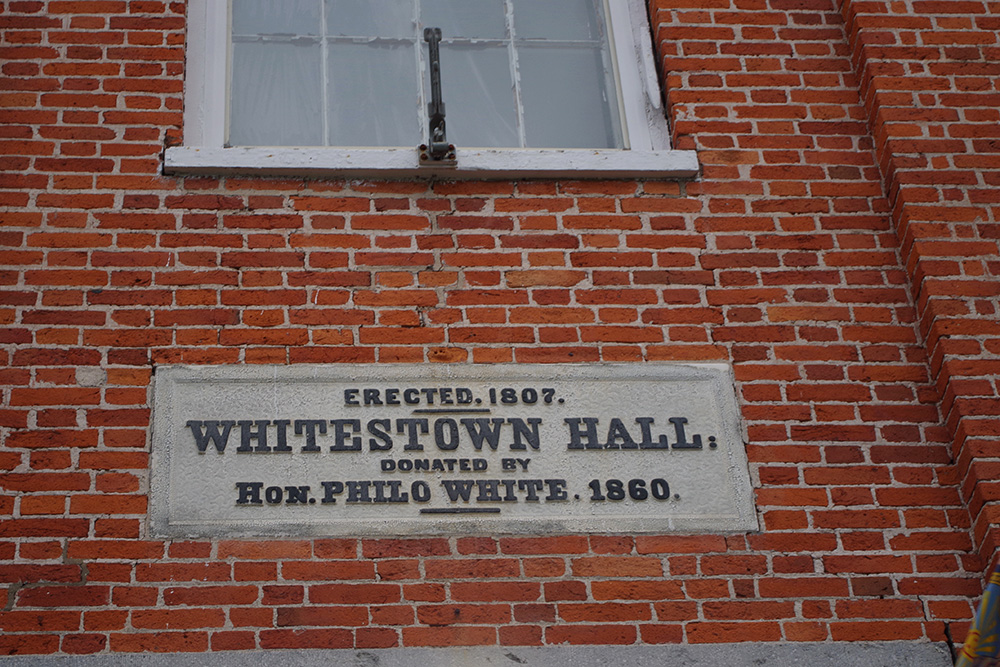
Note: The building served as courthouse until 1853 when the county seat was moved to Utica and the property reverted to the heirs of Hugh White. In 1860, the property was re-donated to the Town of Whitesboro and Village of Whitesboro.
History: The county was created in 1798 and Rome was selected as the county seat. Two jails were built and in 1801 a school house in Whitesboro became the first courthouse. The second courthouse was built in 1807 to 1808 in Rome and, burned in 1848. The third courthouse was constructed in 1849 to 1851 at a cost of $12,000 and is still standing. In 1801, Whitesboro became the second county seat. The first courthouse was built in 1807 and is still standing. In 1839, the court met in the Academy in Utica on the easterly side of Chancellor Park at John Street and was a two story brick structure. In 1853 the second county seat was moved to Utica and the second courthouse was constructed in 1851 to 1853 at a cost of $20,000. The third and present courthouse in Utica was constructed in 1908 to 1910.
In 1801 Oneida County had two jails but no Courthouse. Court was held in a school house in the Village of Whitesboro. An act of the legislature in 1803 provided that the local Courts of Common Pleas and General Sessions “shall hereafter be held alternately at Rome and Whitestown.” The result was that Oneida County became a two shire County. The County began the construction of its two Courthouses but a lack of money halted construction until the legislature authorized a special tax levy.
The Courthouse in Whitesboro, still standing on the Village green, was built in 1807 in the Federal style of architecture. The first Courthouse in Rome is believed to have been designed similar to the one in Whitestown. It was destroyed by fire in 1848.
In 1849 the County authorized the building of a new Courthouse and jail in Rome at a cost not to exceed $12,000. The Courthouse was completed sometime after 1850 and is still in use. A two-story addition was added on the North James Street side to house County offices in 1896. In 1902 the porch was rebuilt and a dome added to permit light and ventilation to the upstairs courtroom.
Utica was incorporated as a city in 1832 and its growing population began to find it inconvenient because of a lack of transportation to attend Court sessions in Whitesboro. In 1839 the legislature required that all Courts of Common Pleas and General Sessions be held at the Academy in Utica which was a brick two story school building, used as such, erected on the easterly side of Chancellor Park with an entrance on John Street. This act of the legislature in effect stripped Whitesboro of its status as a half-shire bailiwick.
Utica School Commissioner James Watson Williams, in a lecture delivered in 1868, said of the Academy and Courthouse: “It was never commodious for its purpose, and was ill calculated to serve the double purpose it was destined to. Constables were required to stand guard during play hours to stifle urchins’ shouts, while the sacred silence of study hours was interrupted by the tread and turmoil of throngs of jurymen, witnesses, attorneys and judges; to say nothing of the pleasant grievance of being routed out of this or that recitation room to make way for the jurymen about to cast lots or toss coppers for verdicts”.
Thus, the state legislature on March 17, 1851 authorized the County to appropriate the sum of $15,000 “for the purpose of building a Courthouse and jail in the City of Utica”. The foundations were laid for a new Courthouse on John Street but the work was stopped by lack of funds. The legislature on April12, 1852 authorized the appropriation of an additional $5,000 and construction was completed in 1853. The courthouse was an imposing building. Four Corinthian pillars on the front and a cupola gave it a majestic appearance. It no longer stands.
The legislature on March 12, 1901 adopted a statute which created an independent board of commissioners to “cause to be erected, completed and furnished, ready for use, a suitable building, upon the site acquired, for the use of the County of Oneida, as a Courthouse and for other public purposes”. It also provided that the expense incurred “shall be borne and paid by the County of Oneida” and directed the County Board of Supervisors to borrow “such sum of money as shall be sufficient to meet and pay all the expenditures”. The Board of Supervisors viewed this legislation as a usurpation of its powers and unconstitutional. Long litigation followed but the Court of Appeals upheld the statute and directed the Board to comply.
County Courthouse – Utica
County Administration Building – Utica

County Courthouse – Rome
Old County Courthouse – Whitesboro

Photos taken 2010 and 2017